Showing posts with label Iringa Region. Show all posts

Tuesday, June 13, 2023

The water hole


Sunrise
Sunset

Dusk


There is a waterhole about a half hour away from us and yesterday I had an amazing day experiencing several different parts of the day there. 

In the morning we showed up well before sunrise around nautical dawn. There was fresh elephant dung everywhere and we know that lions use the area as well so we decided to stay in the car until the lighting improved. The air was dry and chilly, I was wearing a long sleeve shirt and fleece jacket. There is a smell to the air in the dry season that cuts hard into the morning air. It's a combination of the dry grasses, scents of animals, and all the different plants in the area. We could hear the birds slowly come to life led by the scrub robins and doves, with the booming ground hornbill echoing throughout the landscape. As the sun came up we circled around the water hole looking for various animal tracks and we saw a fresh lion track in the mud.

Lion print, fresh

There was also eland dung and plenty of tracks of elephants and bush pigs. We heard the helmeted guinea fowl chattering about and then 20 of them finally coming down to drink across the watering hole. We finished up our work and headed out with the plan to return in the evening. 

In the evening the weather was completely different from the morning. My trousers and fleece jacket were replaced with shorts and a light cotton shirt. The air was still heavy when we arrived with the sun likewise very hot. We parked under a tree for some shade and then surveyed the area. We noticed plenty of fresh signs of elephant. A large group had obviously used the site between when we left and around 4pm. I had a feeling that our presence in the morning was likely preventing some animals from coming for their morning drink. We carried on with our work and the sun began to drop closer to the horizon. When the sun sets the weather often turns from a scorching dry heat to a crisp and cool desert night*. Around five knob-billed ducks flew in to feed but quickly moved on. A black-backed jackal passed by in the distance, possibly annoyed at our presence. As it got darker we climbed back in our vehicle and waited patiently. 

We heard a group of elephants before we saw them and right away we knew that they were skittish. We were in close proximity to a village and it still wasn't quite dark so they took their time coming out. We could see the tops of trees shaking and an occasional guttural vocalization but they remained hidden for about 15 minutes. Eventually a small group emerged and I saw they had a very small calf. The small group trumpted at us and showed their displeasure by parading around and eventually back into the trees. When it finally got dark four very big elephants led the way to the waterhole eventually followed by over 20 others. They came down and some drank, others splashed water and mud on themselves. It was an intimate sighting and I was pleased after the initial tense moment. They seemed very comfortable with our presence and we could enjoy watching them from a safe distance away.

*This is due to the dry conditions and low humidity. Water vapor in the air traps heat close to the ground and stops it from dissipating into the atmosphere. Air with high humidity also requires more energy to heat up, meaning it also takes more time for that energy to dissipate and for the surroundings to cool down. Therefore, a lack of humidity in deserts allows these arid places to quickly heat up but also rapidly cool.

Saturday, June 3, 2023

Iringa restaurant: Italian Delights


Italian Delights from the main road

A few years ago I heard about an Italian NGO that sold handmade Italian food. We were initially attracted by their bread and ravioli but we soon realized they had a wealth of other delicious food available. They were tucked up in the hills of Wilolesi and had a very professional kitchen with sleek new ovens and kitchen gadgets. We were really impressed with the handmade tagliatelle laid to dry and well stocked freezers with lasagna, meatballs, veg and meat ravioli, and an entire separate pantry for biscuits and sweets. 

We were pleased to see that after a few years operating out of their base, they managed to open a restaurant/shop in downtown Iringa. It has a great location next to the clock tower and they've slowly expanded services since they initially opened. The arrival of the espresso machine was a nice addition and then the outdoor pizza oven put things over the top. There are a variety of cakes and sweets available as well as the frozen goods and delicious fresh bread (I recommend the potato bread!).

Iringa doesn't have a lot of foreign food restaurants and it just so happens there are two very good Italian options though the other is a little ways out of town. It's nice to have this low key location for anything from a quick coffee to a pizza lunch. I highly recommend this place not only for the delicious food and drink but much like the other Iringa staple, Neema Crafts, it was created for and continues to support vulnerable groups.

The interior, limited seating


Friday, June 2, 2023

Iringa highlands walk


I've posted about Iringa town and Gangilonga Rock but one activity I have not covered are the hills east of Iringa town. It's a popular place for evening walks among locals, expats and visitors alike. Most of the trails and road are at a gradual incline and paired with the elevation it can be a little strenuous but there are plenty of scenic viewpoints to stop at along the way. 

The area is classic southern highlands grassland with some impressive 2m (6.5 ft) high grasses and scrub. There are a few walking trails off the main road if you care to explore. There have been stories in the past of assaults and robberies in the area, especially targeting women, but there haven't been any of these issues for years and I think there are enough people using it that it's not so isolated as to be dangerous. These days the dangers are forgetting your sunscreen, hat, or water!


Tuesday, May 30, 2023

The Black-necked Spitting Cobra

We have a lot of snakes where we live and a lot of them are venomous as well. Even the non-naturalist will recognize some of the names such as the Black Mamba, Boomslang, Puff Adder, and Black-necked Spitting Cobra. I love telling people that not all of their bites are fatal but you might lose a limb. All joking aside, snakes are a threat but most if you are aware of your surroundings and take care at night or when shuffling around stationary items, you'll probably be fine.

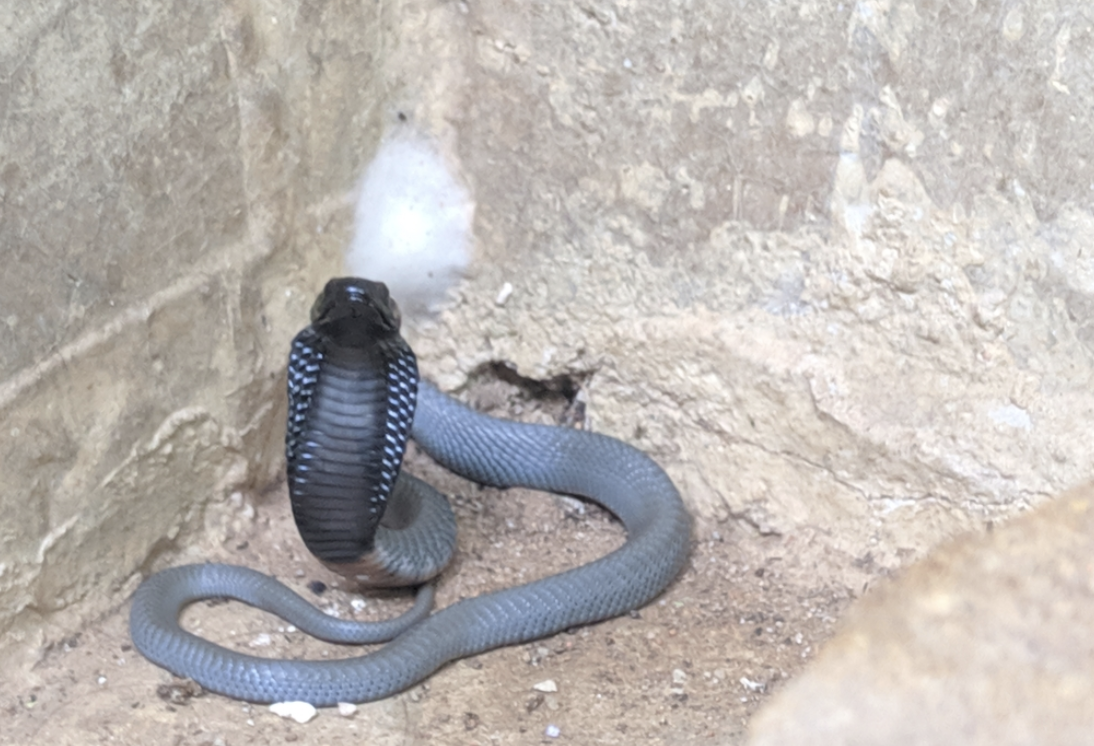
The black-necked spitting cobra (Naja nigricollis) is a species of spitting cobra found mostly in sub-Saharan Africa. They are moderately sized snakes that can grow to a length of 1.2 to 2.2 m (3.9 to 7.2 ft) in length. They are pretty common in our area and they don't just have a clever name; they are known to stand upright and "spit" venom up to 3 meters (10 ft). If their venom enters your eyes, mouth, or open wound, you will be in trouble for sure. I've seen a few spit but I have been lucky to have been in a car each time. There used to be one that lived in a tree outside our banda but it has since moved on. 

A young one ready to spit at me in the shower

 
A year late I suspect this is the same individual.

Well, last year we found a young one in our shower and we suspected he was living underneath the structure. The shower area is full of geckos at night and we've seen a few different types of snakes in there over the years. You gotta be careful at night! 

I recently saw a black-necked spitting cobra during the day and suspected it was the same individual due to its size. After seeing the snake during the day, we noticed in the evening that a gecko was sticking out of a hole, a very unusual position for this particular species of gecko which does not normally spend time in holes. We poked the gecko and sure enough, it was not responsive. It makes sense that the snake had grabbed the gecko and prefers to consume it in the comfort and safety of its home.

Turners thick-toed Gecko has met its end


Sunday, May 28, 2023

Birdwatching at home

Bird watcher equivalent to the beer bottle on the beach
 
Repurposed grinding stone
 

We are lucky to have a covered porch area and a pair of bird baths to provide entertainment for us. The bird baths are actually repurposed grinding stones, something which is rare to see in the global north but still very common here. I am particularly fond of one in particular as I collected it on an expedition to the bush from an area that is now uninhabited. It's fascinating to contemplate its age and echoes of human history. But for now, it is filled with water and enjoyed by birds (and critters) of all types. 

The bird bathes receive more attention in the dry season when water is more scarce but it still receives visits year round. The bird baths are situated in an area about 4.5m (15 ft) from our sitting area allowing for easy viewing. We can appreciate them with the naked eye or enjoy more detail using binoculars but they are certainly close enough for easy identification when binoculars are not handy. 

I really enjoy having my coffee in the mornings and watching the different groups of birds pop in for a drink or quick bath. We've seen 225 of species at camp since we moved here with about 55 of them having been recorded each month. That means there are plenty of familiar faces while also the possibility of a rare visitor turning up. It's fun to note the behaviors and etiquette at the bird bath; Ashy Starlings come in a large group and trash the place, the African Bare-eyed Thrush bullies everyone and doesn't share, weavers overwhelm the bath but readily share with smaller birds, and on and on.

A sample of the visitors, including our resident Shikra

The bird aren't the only thing attracted to the bird baths. Toads, frogs, wasps, bees, mongooses, monitor lizards, smaller lizards and skinks, jackals, dogs, and everything else that needs water to survive occasionally find their way to the water source. It's a simple addition to our outdoor space that provides constant entertainment and wildlife sightings!

Saturday, May 27, 2023

The dog and the toad friendship

We have a few dogs here at camp and they have a ton of freedom very rarely afforded to dogs in the west, or as is now en vogue to say, the global north. Our camp dogs roam free in an area of about 50,000 square meters or 12 acres. There are a few different structures scattered throughout our property but the area has a lot of wild spaces with trees, shrubs and grasses. The area surrounding us is sparsely populated with the majority of disturbed areas being fields and farms. As a result we did a significant amount of boundary training with the dogs when they were young to ensure that they could lead a life of freedom in adulthood. 

The dogs are great at barking at intruders such as bush pigs, kudu, and the occasional lion, but they are frankly very cowardly dogs. When they were young we initially had them sleeping in a large enclosure. One night a hedgehog roamed into their territory and they were petrified. They were so traumatized that the next day they didn't want to go back in! They were also terrified of a leopard tortoise the first time they saw one, much to my amusement. 

Over the years they've gotten to recognize friend from foe and although they are still cautious they are no longer terrified at every single thing. In fact, they've been able to forge friendships that I would have initially never thought possible. 

One of the more common critters in the dry season are toads. Specifically, the species named guttural toad (Sclerophrys gutturalis) are most common here. They are experts at digging shallow holes during the day and at night finding water sources to wallow in. They're one of those creatures that's kind of always around no matter the time of year. They show up in the bird baths, the residue from our bathing water, and any other random pool of water that happens to form. 

Toad in the day burrow

We recently bought a bowl for the dogs to drink water at our banda. We should have known but when we put it out the toads immediately began to gather in the night. Perhaps they liked the bowl's dimensions or the clean water but for whatever reason, we saw a concentration of toads that we had never previously seen. At one point there were five toads in the bowl with others lurking in the background. It was a little alarming to walk by and have them all simultaneously scatter. 

We wondered what the dogs would think and it turns out they don't really care. They initially looked at the toads with amusement but then later chose to dismiss them. It even reached the point where the toads would remain in the bowl while the dogs drank, though I'm not entirely sure if that's based on familiarity or a lack of awareness from our occasionally dopey dogs.

The good life, from a toads point of view.
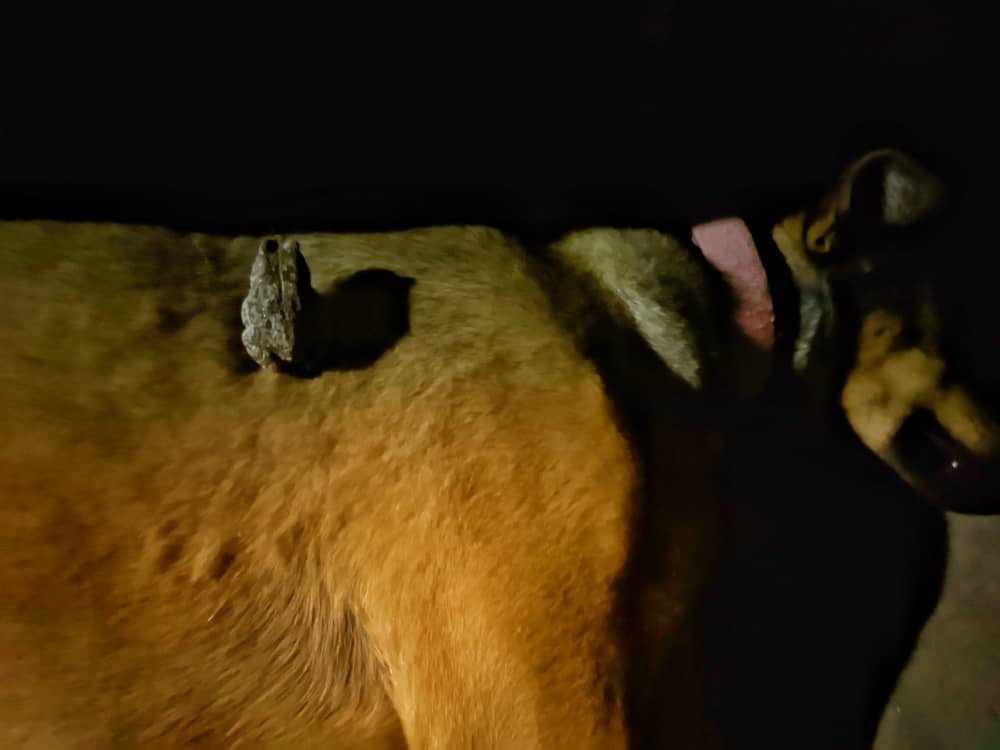
The toads began to make themselves at home, spending more and more time on our veranda/patio space. Once again, the dogs were initially curious but then ignored them. It reached the point where the toads would potter around and literally on top of the dogs while they were sleeping. Sometimes the dogs will pop their heads up seemingly startled, only to see the toads and give a kind of, "Oh, just these guys" look before settling back down to sleep.
The toad is using him as a pillow.

Friday, May 26, 2023

End of rainy season


Mid-rainy season vs. end of dry season, same spot
 

The end of rainy season and transition to dry season is quite different than the transition from dry season to rainy. When rainy season initially arrives a deluge of rain immediately causes a flurry of grasses and leaves to appear. I've posted about this transition before and it's truly a shocking change. When the rainy season ends it's more of a gradual drying out of the area. I always feel like there is one week where you realize that instead of growing, plants are beginning to fade. Everything is still green but instead of being perky and strong, plants are subtly wilting.

I enjoy this transition period because there aren't as many biting insects as the peak rainy season but there is still a significant amount of foliage and vegetation to not have the landscape appear so naked. The mosquitos die out but there are still enough insects to keep a naturalist entertained (mainly beetles, crickets, and katydids) and although the migrant birds depart, there are still the usual suspects around with some birds trying to squeeze out a final clutch (most notably this year we had a very late season African Paradise-Flycatcher clutch). 

It won't be long before there is not a single blade of grass and the landscape appears more desert than tropics. The dry season is a tough time but the rhythm and changes of the seasons is one of my favorite aspects of life here.

Mid-rainy season vs. end of dry season, same spot


Another view

Friday, March 17, 2023

Camp hazards: Acacia thorns


Ouch.
 

Acacia trees are one of the biggest hazards of bush life. There are a variety of species but all of them have thorns in various shapes and sizes, some are hooks while others are spear shaped. Regardless of their shape, all of them can easily tear clothes, scratch faces, and pierce the bottom of even the sturdiest shoes. In the dry season the trees are dry and thus the thorns are hard and inflexible. In the rainy season as the tree retains more water the thorns can actually be flexible and although they are still sharp they are not nearly as piercing.

I spend a lot of time in flip flops and the above photo shows the dangers of this. Acacia trees shed their branches and it's common to have the ground littered with thorny branches of various sizes. They can not only pierce the shoddy flip flops but I've had them pierce the soles of my Merrell hiking shoes! The worst is when you break off the thorn trying to remove it and then you're left with an embedded thorn that only pokes you when applying a specific amount of pressure like when running or climbing stairs. 

You might notice that many of my camp clothes also have small tears and holes. These are undoubtedly from being snagged on branches which is unavoidable. It's one of the reasons I have bush clothes! It's also not uncommon to see us with scratches on our face and our arms and a tell-tale sign someone has had a bush expedition. 

It has taken some adjustment but now we are very careful when moving through the bush and I hope that we've reduced the amount of shoe-piercing and face-scratching incidents but the hazards still remain! It is one of those things that you have to experience to really take care; one brand new shirt ripped wide open, a seemingly innocuous branch that brushes your face and draws blood, or a harmless branch that pokes through your shoe leaving you hopping around on one foot. Everyone's gotta go through it to learn their lesson!

This species of acacia can seriously impale someone


Saturday, January 28, 2023

Isimila Stone Age Site


Taking in the views
 

Isimila Stone Age Site has been on my list of places to go for about five years. It's a shame that we haven't gotten out there before today, though in retrospect I must admit that I had totally underrated it. I am not sure why though it may be traced to a trusted friend giving a negative trip report. It's only about a half hour drive from Iringa town and is an easy half day trip. In my defense, one does have to go down the big hill from Iringa, which can be painfully slow if there are overloaded trucks. The road due south from Iringa to Isimila is also densely populated with traffic police and thus the travel situation can be overall discouraging.

The site is home to the Middle Pleistocene archaeological site with most of the artifacts being roughly 60,000 and 100,000 years old. To be honest I was not very impressed by the archeological site which may have been partially our fault for rejecting the guide. But there were no signs or educational content, something which could have greatly enriched the experience. There were some very crude stone tools laying in modern man made structures built to protect the stones.

However, the landscape and rock formations were quite stunning. It's a bit of a random occurrence that the archaeological site happens to be next to a beautiful natural area but it certainly helps to create a worthwhile day out at the site. There had been significant rain in the past week so the area was green and the ground was soft. There is a nice trail that walks along the bottom of the canyon and the varied sandstone pillars were stunning. I couldn't believe that more people in Iringa don't talk about this place as a "must do" for Iringa day trips!

I also must commend the main office. The staff were friendly and helpful. Prices were transparent and payment was done electronically. The visitor log also indicated that they were getting plenty of visitors which is a great thing for second rate tourist attractions like this. We really enjoyed the walk and next time we'll come a little earlier to beat the heat.

Dry soil with what I think is clay mixed in.

Impressive rock!

Canyon views


Sunday, January 22, 2023

Rainy season: After one month

Same landscape, commiphora grassland
 

Same area, now with water
 

It has been one month since the rains started and the area is brimming with life. It's difficult to explain the rapid change in environment but photos do a good job illustrating it visually. Aurally, the air is filled with sounds of more birds, some of them migratory while others are simply more active. Insect sounds fill the air from crickets and grasshoppers buzzing to beetles hissing. The air is no longer hot and dry but rather it's humid and heavy. Clouds hang in the air greatly diminishing the suns powerful rays. 

I often think that visitors never truly understand tropical climates until they experience both extremes of the rainy and dry season. It's truly difficult to believe that the area can make such a huge transformation but life proves to be very adaptable. In the dry season elephants dig for water, turtles bury themselves for months until the rains come, seeds lay dormant and other creatures migrate. The rain brings everything back resulting in a rich proliferation of life. 

An ephemeral pool

It was clear that a group of ungulates had passed through this grass, if you look carefully you can see the trail


Sunday, January 15, 2023

Kisolanza Farm House

A typical cabin
 
Inside with a cozy fire

I have only written about Kisolanza Farm House twice, one time after our first visit and another to mark the opening of their roadside cafe. Although there are only two blog entries we have visited countless other times and it remains our favorite weekend getaway from Iringa town. It is located only a one to one and half hour drive from Iringa town and has setting that makes you feel far from the (very relative) bustle of Iringa town. It has such a unique feel, combining the vibe from a large working farm with a hospitality of a bed and breakfast. It's a spacious property that is conducive to long walks and the southern highland climate means that the temperature is always cool. The furnishings are not ostentatious nor are all the amenities super modern but that is a good thing as it suits the farmhouse vibe.

There are accommodation options for everyone, from camping to tastefully furnished and adequate cabins. I can not say enough about the food about Kisolanza, much of it in part due to the fact they grow a variety of vegetables on site but also due to their preparation. One of my favorite things is that there is no set menu. There are vegetarian options but otherwise you don't know exactly what you will get for a starter, main dish, or dessert. I have dined there dozens of times and have never been disappointed in any part of a meal. It's even difficult to choose favorites because of how unique and delicious all the dishes are. I will say, their dairy based foods are out of this world. From their creams (strawberries and cream dessert!!!) to their butter, cheeses, and all the other dishes that benefit from dairy as significant ingredients, you can taste the freshness of the dairy and quality of the cows. 

Iringa residents all have a soft spot for Kisolanza Farmhouse and it feels like a real hidden gem of Tanzania. I often see overlanders and campers passing through the property and I always think about how it's just a blip on their radar on a likely long journey. We met a huge bus last night and they were coming from Victoria Falls on the way to Kenya and Uganda meaning the overnight at Kisolanza is likely to be unmemorable. My only advice for these travelers is to take a break from cooking your food whichever night you stay at Kisolanza and enjoy the bounties of the farm! It's better food than you can get in most restaurants in big cities in Tanzania and for sure they are unique dishes.

Steak with potatoes and steamed veg

Chocolate cake and strawberries


Homemade yogurt with honey, fresh butter, and strawberry jam for your toast.

Simple breakfast, eggs to order, bacon and tomato.


Saturday, October 22, 2022

Gangilonga Rock


Iringa is unique for a Tanzanian city in that it actually has a pretty cool unique city attraction. Gangilonga Rock is located on the outskirts of Iringa town just up the hill from Sunset Hotel, easily reached by either foot or bijaji/motorcycle/taxi. 

There is a very short walk through a wooded area and then a climb up a gigantic crevice of the rock. Rocks have been piled to create a little staircase but it still requires some balance. It's a very short climb and I am always blown away by the views of Iringa. The rock provides a really cool point of reference over the larger landscape and the area is unbelievably photogenic. Visiting during the sunset basks the area in a soft evening light which causes most people to continuously take photos with each incremental change in the hues of the light.

I am a firm believer that every visitor to Iringa should try to climb the rock!


Monday, October 17, 2022

Ruaha National Park: Guest visit


Five hyenas came in the morning
Ruaha National Park is known for its vastness, lack of crowds, and wilderness. One of the major reasons for this is that the wildlife densities are low, especially in comparison to the more famous northern circuit parks such as Serengeti National Park and Ngorongoro Crater. This means that visitor experience can be hit or miss, both due to the chances of good wildlife sightings a well as the personal preference of the visitor. Some people really like the wild feel with few cars while others yearn for more frequent wildlife sightings. 

We had a friend visit from America and he was not specifically interested in the wildlife so we were curious how he would find the safari. We did a typical three day, two night safari with accommodation at the park run bandas.

The safari took place in peak dry season meaning that animals congregated at the remaining water sources making it easier to spot wildlife. We are lucky enough to find ourselves in Ruaha National Park relatively often but most time there is an aspect to the visit relating to our work. It had been a while since we took a purely recreational visit to the park and it's always a unique opportunity to share the experience with a first time visitor, especially a long time friend. 

Our safari was Ruaha National Park at its best. We had intimate sightings, saw a diverse species of wildlife, and felt the beauty and power of nature. Some of the highlights were having two lions on a kudu carcass across from the bandas, waking up to a group of hyenas in the river scavenging the kudu, following a pride of 13 lions that had just eaten to the river, along with countless other elephant sightings. Apart from one leopard sighting (which we actually didn't manage to see) we had every single sighting to ourselves and probably passed a total of five vehicles on the road during the entire time.


Tuesday, September 20, 2022

River drying in the dry season

I have posted some contrasting photos of rainy and dry season but I think this set of photos demonstrates the slow drying of the area. This is a small local river that is flowing from December to around July. You can see in the last two months the water levels have dropped dramatically. Elephants will still be able to dig for water and there may be some remaining pools but likely with near tepid water.

Mid July

Mid September


Monday, August 22, 2022

Ruaha National Park in August


Group of lions with the sun setting in the background.
 

This past month I had some fantastic trips in Ruaha National Park (RNP). Tourism has really picked up and the number of vehicles and lodge occupancy is almost back to pre-covid times. RNP is already one of the lesser visited parks in Tanzania and during covid the numbers plummeted dramatically. I suppose we got a little spoiled having the park nearly empty but obviously it is good for tourists to have returned and pump some money into the national parks. 

The park is already very dry with very little flowing water in the Ruaha River and the Mwagusi only harboring some small pools of water. In most of the area around the Mwagusi River the grasses have been consumed and game-viewing is easier. Although the wildlife density is low relative to other places in Tanzania, the Ruaha "vibe" is in full force.

Two impala with a "Sausage Tree" (Kigelia africana) and palms as a backdrop.

The Mwagusi River, dried.

Friday, July 22, 2022

Dry season vibes

Checking out a raptor in the distance.

The dry season can be harsh due to the heat but there can also be some upsides. Due to the lack of vegetation it is much safer to walk due to increased visibility. This allows us to do much more bush-walking than in the rainy season though we still have to keep our eyes out for straggling herbivores. It's not entirely uncommon to come across an dehydrated and agitated buffalo or hippo so we still have to be extremely alert and duly note all the wildlife tracks and signs. 

We have some areas that we love to walk in, in particular an area along a river. It has varying levels of water at this point in the year but it's a fantastic spot to walk. Although it is dry we are technically in our "cool" season so it's kind of a sweet spot for hiking. We took this hike in the early afternoon which is something we would not do in the peak dry season. For whatever reason (I can't claim to understand the patterns) there were also no tsetse flies in this area at the moment making the hike even more enjoyable!

We saw a few kudu and enjoyed listening to some elephants across the river. We were careful to not get too close to them while still enjoying their presence, which is a fine line!


A nice little elevated point gives a nice vista. 

This photo is only a kilometer or two from the first photo which demonstrates how quickly the river dries.


Sunday, May 29, 2022

Transition to dry season


Walk in the woods

After two very wet years, this years rains were way below average. Something strange happened with the weather whereby the late rains were later and heavier and/or the normal rainy season was earlier and shorter. This resulted in above average rains in January and February with rains nearly completely subsiding by March with a few showers in April. As a result the onset of the dry season has been earlier than usual.

The transition from rainy to dry season is a slow and creeping transition. The rainy days less frequent changing from raining every day, then every few days, to finally having a week or two pass before it rains. A sporadic rain will then be welcome but then there is always a day where one realizes that it is not going to rain for another six months! Evidence is usually through the drying of leaves or the lack of germinating grasses and shrubs. Intermittent influxes of termites and other insects become less frequent and the oranges and brown overtake any green and yellows.

The rainy and dry season are so long that the transition times feel like they pass so quickly. A few weeks of sunshine with the absence of rain will sap all the remaining moisture from the air and ground. It will signal all the flora and fauna to pack it in and hold on tight until the rains come again!

Sometimes it reminds me of the fall colors in North America.