Showing posts with label Culture. Show all posts

Saturday, May 27, 2023

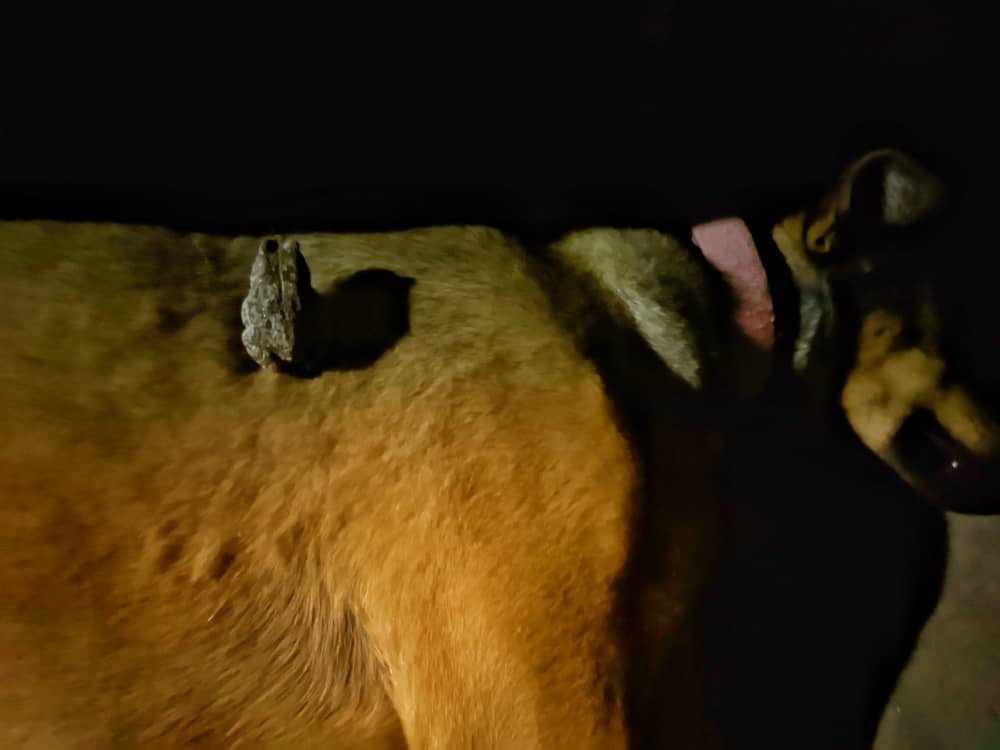
The dog and the toad friendship

We have a few dogs here at camp and they have a ton of freedom very rarely afforded to dogs in the west, or as is now en vogue to say, the global north. Our camp dogs roam free in an area of about 50,000 square meters or 12 acres. There are a few different structures scattered throughout our property but the area has a lot of wild spaces with trees, shrubs and grasses. The area surrounding us is sparsely populated with the majority of disturbed areas being fields and farms. As a result we did a significant amount of boundary training with the dogs when they were young to ensure that they could lead a life of freedom in adulthood. 

The dogs are great at barking at intruders such as bush pigs, kudu, and the occasional lion, but they are frankly very cowardly dogs. When they were young we initially had them sleeping in a large enclosure. One night a hedgehog roamed into their territory and they were petrified. They were so traumatized that the next day they didn't want to go back in! They were also terrified of a leopard tortoise the first time they saw one, much to my amusement. 

Over the years they've gotten to recognize friend from foe and although they are still cautious they are no longer terrified at every single thing. In fact, they've been able to forge friendships that I would have initially never thought possible. 

One of the more common critters in the dry season are toads. Specifically, the species named guttural toad (Sclerophrys gutturalis) are most common here. They are experts at digging shallow holes during the day and at night finding water sources to wallow in. They're one of those creatures that's kind of always around no matter the time of year. They show up in the bird baths, the residue from our bathing water, and any other random pool of water that happens to form. 

Toad in the day burrow

We recently bought a bowl for the dogs to drink water at our banda. We should have known but when we put it out the toads immediately began to gather in the night. Perhaps they liked the bowl's dimensions or the clean water but for whatever reason, we saw a concentration of toads that we had never previously seen. At one point there were five toads in the bowl with others lurking in the background. It was a little alarming to walk by and have them all simultaneously scatter. 

We wondered what the dogs would think and it turns out they don't really care. They initially looked at the toads with amusement but then later chose to dismiss them. It even reached the point where the toads would remain in the bowl while the dogs drank, though I'm not entirely sure if that's based on familiarity or a lack of awareness from our occasionally dopey dogs.

The good life, from a toads point of view.
The toads began to make themselves at home, spending more and more time on our veranda/patio space. Once again, the dogs were initially curious but then ignored them. It reached the point where the toads would potter around and literally on top of the dogs while they were sleeping. Sometimes the dogs will pop their heads up seemingly startled, only to see the toads and give a kind of, "Oh, just these guys" look before settling back down to sleep.
The toad is using him as a pillow.

Saturday, April 29, 2023

Lifespan of shoes


The environment here is difficult on all types of clothes and footwear. The sun, dirt, mud, thorns, you name it, it's gonna be relentlessly torturing your footwear. I recently replaced my shoes after a year and a half and you can see the wear and tear.

I have to give Merrell some props because the shoes were still in decent shape. The sole was beginning to peel a little and the heel was worn down and getting frequently punctured by thorns but otherwise they were in good shape. I probably could have gone on using them for a few more months but as I found myself out of Tanzania, I went ahead and replaced them. The funniest thing about it, it wasn't the Tanzanian environment that finished them off, rather it was a week in the UK rain. After having my feet sufficiently soaked for a week straight of April rains, my shoes had the classic impenetrable wet sock stench. Even when I took off my shoes, my socks were saturated with the stink.

Thus, I was pleased to replace my shoes and even happier to replace them with the same brand and model. The shoes proved to be sturdy and suit the environment well.

Sunday, February 26, 2023

CNG conversion for cars in Dar es Salaam


View from the back.

When I called for an Uber in Dar es Salaam the other day, I was shocked when I opened the trunk to reveal a gigantic compressed natural gas (CNG) cylinder.  I immediately assaulted the driver with questions and he was kind enough to share that installation was around $770 to $900 to install. The cylinders were available in the city for $7.28 (11kg). He said they were not available everywhere so one has to plan in advance but he didn't feel it was an inconvenience. He estimated that he could get 180-200km from each tank. He also said that the original petrol system remains in the vehicle so if the cylinder ran out he could continue to drive.

We rode with one other driver that had installed the system. I asked other drivers that did not have CNG if they had heard of it and if they planned to install. Many of them said the initial installation fee was cost prohibitive and almost all of the drivers alluded to the possibility that the incumbents profiting from the petroleum industry were not encouraging of this transition. The drivers would be excused for confusing me with a CNG salesman doing market research but I was truly fascinated. I did a little research and saw that Tanzania has national natural gas production and a pipeline that extends from the south to Dar es Salaam. This would explain how the local industry can be competitive and bodes well for sufficient energy production and reducing dependency on imports. 

We did several back of envelope calculations with drivers based on their reported fuel economy. We estimated that it would take 15,000km traveled before the initial investment was recouped. Most of the drivers reported that this would take six months to one year based on their daily driving. If I was less occupied with my day to day job and more entrepreneurial, I might be tempted to drop everything and invest in the CNG business in Tanzania. As the middle class grows and vehicle ownership increases, the costs of fuel are one of the first shocks to first time car owners. I hope that CNG conversion becomes more popular and widespread as it would support both the Tanzanian natural gas industry and reduce emissions and dependency on imported petroleum products. 

EDIT : A week after I saw this article about growth in the industry 

Saturday, February 25, 2023

Locally manufactured clothes

The current trousers of the year
 

I've written about some aspects of the clothing industry here (second hand 'bale' import shop, second hand 'bale' auction, second hand market) but one aspect I have not covered is locally produced clothing. Tailors are ubiquitous in Tanzania, especially in urban areas as they don't need an office rather they can simply move their foot-powered sewing machines and clothe to anywhere they please. It's not uncommon to see them strewn about the city in front of random shop fronts. School uniforms are a big part of their business but many people use them for full gowns and outfits, especially for special events like weddings. It's common for weddings to have coordinated custom tailored clothes for the wedding parties. I have used these tailors mainly for repairs which is something I absolutely love. Small things like broken zippers, holes in pockets, and loose stitching are a convenient and cheap service offered. 

On a slightly higher level are clothes that are mass produced somewhere in a mass manufacturing facility. This is most evident for me when it comes to trousers. Sellers in Iringa randomly go through different phases where everyone has the same brand of trousers. Two years ago it was, very randomly, Jeep brand. They even had a metallic shield that was stylishly sewn onto the rear of the trousers but to the best of my knowledge the vehicle maker does not have an official trouser manufacturing subsidiary. How these brands and names are chosen? Who knows, but the result is the proliferation of a new brand each year, which is possibly the same manufacturer. I realized how successful they are when I saw that four of the men in my workplace had the exact same trousers as me! They fit well but the stitching and quality of the trousers is not the greatest quality. However, I'm happy to support the local industry and the environment is so tough on my trousers anyway that not even high quality trousers stand a chance at long term survival!

The classic human powered sewing machine and street set up.


Sunday, February 19, 2023

Driving in Dar es Salaam

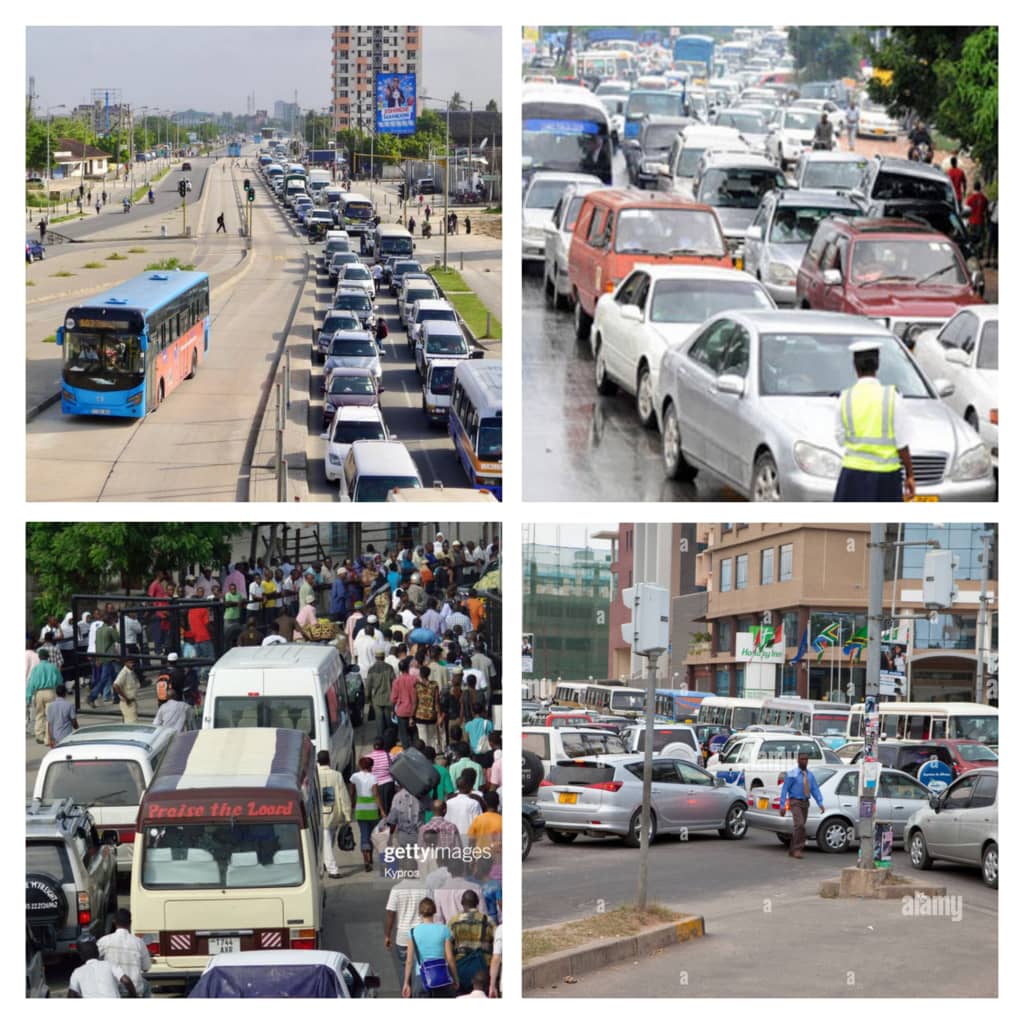
Upper left is the "mwendokasi" public bus and a collection of representative Dar es Salaam traffic photos

One of my least favorite things in Tanzania has to be driving in Dar es Salaam. Dar es Salaam is a large city with around 7 million people. I am nearly always based in a 50 km2 (31 miles) grid and inside those areas there are only a few multi-lane roads. These leads to densely occupied roads of not only cars but also bijajis and most hectic, the motorcycles. This does not account for the men dragging two wheel carts by hand, pedestrians, traffic police, construction teams, public transport conductors, truly an endless variety of transport means and methods. 

To make things worse for myself, I'm used to the sleepy Iringa traffic. Heck, we don't even have a traffic light in Iringa town. So when I arrive to the bustling Dar es Salaam and cut-throat traffic maneuvers, I'm often left initially aghast like some old granny trying to slowly merge into a lane only to have continuous flow of aggressive drivers cutting her off. It takes a moment to get into the Dar es Salaam mindset until it shifts so far along the spectrum that you need to again remind yourself: better to be slow, but safe. The last thing you want is to be involved in a fender bender or minor scratch. Insurance providers here are notoriously dodgy and unless it's a very serious accident it's the norm to simply negotiate with the other driver. Depending on your perceived culpability and the others drivers approach (fair dealing or milk for all its worth?), this can be an incredibly stressful and difficult situation to deal with.

The other day I had a rather "normal "Dar es Salaam drive that I felt was totally representative of the perils one faces on the road here. 

I drew a box around the area of what is Dar es Salaam proper (
Total area: 52.79 km² (20.38 mi²)
. The little bit jutting out is called the Peninsula and it's the most affluent area of Dar es Slaam.

I was picking up a vehicle from near to the Tazara Railway, which is on Julius K. Nyerere Rd, one of the main veins running from the airport to downtown, to Rose Garden in Mikocheni, a neighborhood in the north of the town. I would have to basically cross through the city but not necessarily pass through downtown. This is a 15km (9.3 miles) route that Google Maps predicted would be 30 minutes. If you want to have an indicator of mobile phone and data penetration in emerging markets, Google Maps traffic accuracy may be a good proxy. And you will see that Google Maps has no idea how to estimate drive times in the chaos that is Dar es Salaam. 

Even before my journey I faced one of the common challenges on the road here. On my way over we were stopped for 15 minutes to allow for a government dignitary to pass. This happens all over Tanzania for a variety of politicians from the president to local ministers. It's often a flex of power which is extremely annoying as smaller dignitaries frequently cause traffic to stop for up to a half hour. I had annoying chosen a motorcycle taxi and was left roasting in the sun on the open road which possibly primed my state of mind for the upcoming journey. It was kind of cool when the motorcade passed and a fleet of motorcycles at the front of the line took off like the start of a racing event. I felt like I was either in a race or part of a biker gang with literally dozens of motorcyclists eager to hit the open road after the long wait.

My journey started at 3pm, which I thought was enough time to avoid the major traffic exodus from downtown outwards. However, immediately after turning onto a main road I was stuck behind a long line of lorries. Massive trucks with trailers and containers clogged up the road and it took 10 minutes to merge onto the main road. After finally merging I was immediately at a standstill for 5-10 minutes. There was an overpass being constructed at the intersection so you can imagine how congested that intersection was if it necessitated an overpass and now it was under construction. Trucks creaked through and traffic police directed the traffic as hustlers touts weaved in and out of traffic hawking wares. 

I love the variety of wares the hawkers have and I often feel like there are distinct trends and gluts of randomly specific products. The current item of the month were weird Asian style knives that had a sheath, something a ninja in a low budget movie would have. The touts are a subject I should cover in a separate post as the world of the street touts is fascinating. There are also disabled folks and street children begging for money, as well as an increasing amount of uninvited window washers. They are nowhere near as extortionate or aggressive as some other cities in the world but it can still lead to an uncomfortable experience. 

After about a half hour and half kilometer I was still stopped in standstill traffic. I was looking at my phone for a bit and suddenly someone knocked on the window. A plainclothes gentleman with two others behind him informed me that I was parked on the train tracks and it was illegal. I glanced behind me and saw that I was indeed parked on extremely faint and dated tracks that were only partially visible at various points. There were modern and used tracks a few meters behind it. The guy shouted at me to bring my car over to the side and that it was really illegal what I was doing. I pushed back and said I had done nothing wrong and that I would like to see some ID as I noticed his clothes were totally normal clothes. He quickly showed me an ID card that was from the railway line but it had the position as a cleaner. He expertly pulled the card away quickly and I played along for a little longer. He became insistent that I give him my driving license and I knew once he got a hold of a personal item he would have all the leverage. This guy was clearly impersonating a person of authority and if I pulled over him and his pals would have me cornered. I spoke more forcefully and told him that I read his ID, even the position, and that if I had done something wrong I apologize but he needed to stop his nonsense. As if on cue, the traffic started moving and before he could rebuttal I had rolled up my window and pulled away. 

I breathed a sigh of relief. For a split second I thought I was screwed but I was glad I caught on fast. I've had several of these scams happen to me in Tanzania, mainly in Arusha and Dar. One time some guys in Arusha tried to tell me that the leaking air conditoning water was contaminating the road and that I needed to pay a fine. They were super aggressive and intimidating. I am a pretty assertive person but I can't imagine what it's like for more passive people to have to deal with these con artists. 

Just as we finally passed through the intersection and traffic started to open up I got stuck behind a convoy carrying a huge piece of industrial equipment. The convoy was clogging the road with several "LARGE VEHICLE AHEAD" signs affixed on the escort vehicle roofs. The main load carrier was driving at a seemingly imperceptible speed and for whatever reason the convoy was blocking the front, back, and all sides. I was part of an angry wall forming behind them with other cars being much more aggressive trying to weave through them. We finally managed to overwhelm them and break their formation but it was a good 10 or 15 minutes of a snails pace. It was excruciating to see the open road ahead but no way to circumvent the convoy. 

After that obstacle I then hit the Milimani City Mall area which was especially crowded with hustlers. I always try to support the guys selling stuff on the street even if it is of spurious quality. I feel for their circumstances and for the most part the majority are insistent but respectful. I'm sure there are some mental health issues that cause some interactions to become more uncomfortable than others but I also think it's important in a way to have society on full display so that hopefully the country can provide the social support they need. 

I should note that traffic police in Dar es Salaam direct traffic during peak hours in the morning and evening which can result in some very long wait times. I don't know if there is a method to their madness but it is just that, total madness. 

I finally reached my destination one hour and thirty minutes later. To be totally honest, this trip would largely be forgotten in a few months as a totally average journey across Dar es Salaam. But when I got back I thought one of these "normal" excursions should be documented for posterity. I also do want to give a shout out to the late Magafuli because he completed several big infrastructure projects in Dar es Salaam that have greatly eased traffic at many points. There used to be no overpasses and only two lane roads but the commuter bus (with exclusive lane to ensure smooth movement) and other projects have made things much smoother for all those on the road.

Sunday, February 12, 2023

Sauti za Busara (Trip V)


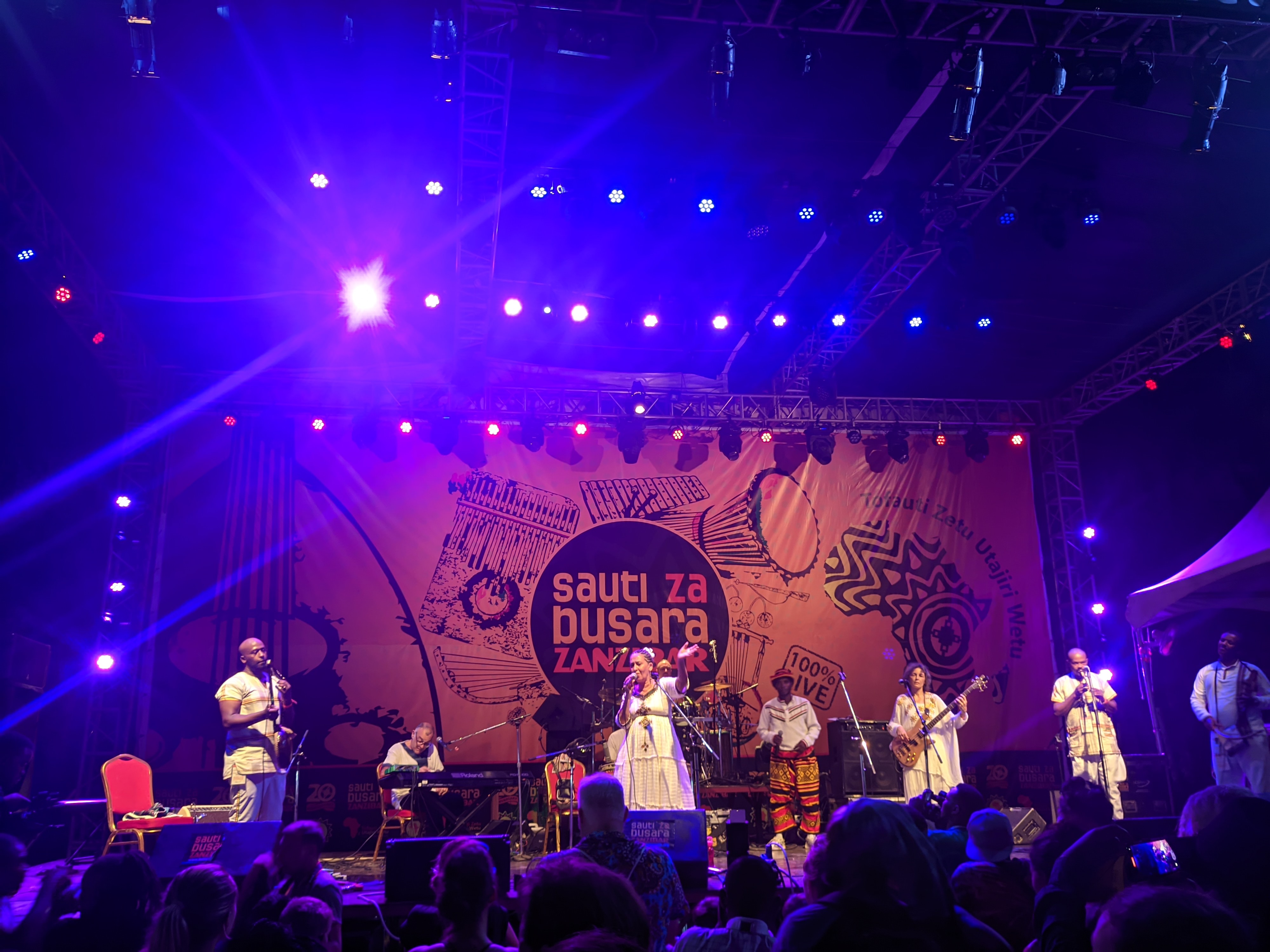
After missing the past two years I was thrilled to be back at Sauti za Busara (Trip IV). The festival was slightly downsized from years past but still offered three nights of pan-African music on two stages. I have to commend the event organizers and the artists because the festival continues to be one of my favorite things in the world.

Saturday night was a perfect Sauti za Busara night for me. We found a cozy spot in the middle of the venue which happened to be around the friends and family of most of the artists. The raucous support was contagious as the musicians performed at a high level. The highlight for me was a session at 7pm called "Swahili encounters". Performers consisted of a "super group" of artists sampled from different bands. The festival organizers arranged for some artists to spend a week collaborating and the result was performance that represented everything I love about Sauti za Busara. The musicians were full of joy as the unique blend of sounds and  instruments filled the old fort (see lineup below). The group brought high energy and world-class musicianship and the crowd reciprocated with cheers and dancing. It was one of my all time favorite concert moments!

Swahili encounters featuring: Nasibo (Zimbabwe): mbira, vocals; Asia Madani (Sudan): vocals, percussion; Islam Elbeiti (Sudan): bass; Naxx Bitota (DRC): vocals; Pendo Zawose (Tanzania): percussion; Mariam Zawose (Tanzania): percussion; Hassan Mahenge (Tanzania): oud, percussion, saxophone; Tryphon Evarist (Tanzania): accordion, vocals, percussion; Neema Surrie (Zanzibar): violin

The festival was well attended with top notch people watching and mixing of cultures. An old Zanzibari grandpa supporting his family member in a local Taarab band next to a group of hip Kenyan women drinking beers and swaying to the beat next to sun-baked Europeans with grins from ear to ear as they soak up the unique atmosphere. I will always rate Sauti za Busara and the tradition continues strong!

The smaller venue with seating, view towards the sea.

The main stage with the castle towers.


Saturday, January 21, 2023

Veterinarian bush doctor


A simple cone from cardboard and duct tape that you can attach around the collar.

We eventually put a small piece of cardboard to close the gap but we gave the dog a day to get used to eating and drinking with the cone.

A huge challenge having dogs in the bush is the lack of veterinary care. Village dogs are typically utilitarian; kept around for security, to eat scraps, and the worst, to "clean up" human feces (especially toddlers who can not easily control their bowel movements). The dogs are typically cared for but moreso as a farm dog than a domestic animal. They are normally not allowed inside due to being dirty and full of ticks. They are also not coddled and physically pet. Many westerners find this cold at best and bordering on mistreatment at worst but it's a very different context and in the end I feel like most people do ultimately care for their dog.

As I write this I realize I should probably have an entire blog post about dogs. The point of this blog post is to highlight the creativity one must have when seeking supplies for the dog. In this case, one of our dogs was bitten by a spider and it caused some serious itching above his eye. We realized we needed to get him a cone. 

Unfortunately there were not any cones available in our region and although the internet is full of advice for "do it yourself cones", they are actually lacking detail and, in my opinion, over simplify the issue. Dogs typically despise cones and it's not difficult to understand why; they obstruct basically all their senses and create a rather claustrophobic environment. Thus, the cone needs to be very secure or else the dog will easily remove it or hurt themselves trying to remove it.

Hopefully the first photo provides an easy to understand blue print to making a homemade cone. The most important aspect is to ensure the collar is very tight. I think cardboard is the best because it is not sharp and thus the dog will not hurt themselves trying to remove it but if I needed to improve on this design I might choose to line the cardboard with plastic to make it tougher.

Good news is, after about five days with the cone and some antibiotics the wound healed up. But it's good to know that we can manufacture the technology on site if necessary!


Friday, January 13, 2023

Charcoal

A very typical charcoal stove.

Another common design for roadside and informal food vendors.

This roving salesman has a tiny bit of charcoal in the bottom of his portable oven with roasted banana and meat. It also appears that he has homemade hotsauce taboot
 

Being from America, I most closely associate charcoal with grilling out in the summertime. Using charcoal only occurred a few times a year and unlike charcoal in the developing world, it was packaged in a way that made the little pieces of charcoal completely uniform. In Tanzania the charcoal is varied with the ray structure of the wood preserved.

Tanzania still has vast areas of land that are unpopulated. Whenever people expand and land is cleared, charcoal is ultimately a nice little byproduct of clearing the land. Making charcoal is relatively easy and makes sense if you have a bunch of fallen trees from clearing areas of land for  framing. You basically stack up a bunch of wood in a teepee like structure, cover the outside with mud or earthern materials (leaving the top and sides open for oxygen flow), light the wood on fire, and then when the fire is burning you plug up the holes and leave it to burn for a day or two depending on the size of your charcoal dome. The science behind this is that heating wood to high temperatures in the absence of oxygen allows it to partially combust and remove water and impurities. This leaves behind an almost pure piece of carbon.

Why charcoal? It burns hotter than wood without smoke and with less flame. It provides a more steady temperature and requires less maintenance than a wood fire. But the really critical factor is that due to the ever expanding human population, charcoal is being made and sold at a very low price. Much cheaper in fact than natural gas and in a low-income country like Tanzania, every shilling counts.

As a nature lover it is always a little painful to see clearing of land and creation of charcoal. The first sign can often be found before reaching the cleared area. Motorcycles stacked with gigantic sacks of charcoal act as middlemen transporting the charcoal from frontiers to the nearest villages and cities. Next is the smell, charcoal mounds have a tell-tale smell, usually amplified by the fact that several mounds are typically found in short proximity of each other. Eventually one will see denuded landscapes with active land clearing at various stages and usually a bag or two of charcoal on the side of the road indicating that there is charcoal for sale. 

Charcoal can get a bad reputation and blamed for environmental degradation but based on what I've seen, at least in Tanzania I do not believe it to be a primary driver of environmental desegregation. Many times it's a secondary byproduct of clearing land for agriculture or other uses. The photos below are from an area that was being cleared for a tree plantation. 

The first prep of branches and logs

Covered in earthern material. You can see remnants of a processed charcoal mound in the foreground of the photo

Bags ready for transport

Hard boundary of a miombo woodland.

Thursday, January 12, 2023

Modern Urinal Challenges

Urinals are a relatively new thing in Tanzania with the toilet of choice being a squat toilet. Buses stop at specific rest points and many of these places have a urinal that is basically a trough with a piece of metal pasted on the wall. It's not a very private nor clean affair and thus more and more urinals are appearing throughout the country. 

Toilet habits can be taboo in any country and it appears that no one thought about how to educate people on how to use the new toilet technology. It reminds me of stories in Asia of people standing on western toilets and squatting on them. But in this case it's a matter of understanding how the actual flushing mechanism works. I've seen quite a few signs that help users understand exactly how to use the urinal without breaking it, something which I have found mildly amusing.

This implores users to only press, not to turn or twist.

You wonder how many times someone slammed their fist into the sensor before they put this sign up.


Sunday, December 18, 2022

World Cup in Tanzania

View from our camp

The World Cup is a global event and the hype around it is palpable even in countries that have not qualified (eg Tanzania). Soccer (football) is truly a global sport and thus fan's allegiances carry over from clubs to national teams making for lively viewing environments. In Tanzania the locals typically support the African teams and generally root for the underdog as well. Going out to watch games at a bar is an awesome experience here even if you are in a small village. People tend to get animated although power cuts are still common which induce a collective groan among the spectators.

This year we were in Pwana Region for most of the group stages and enjoyed watching the first game at lunch (1pm local start time) and then games at 4pm, 7pm and 10pm. We watched nearly all the 1pm and 10pm and 7pm games with highlights including the Saudi Arabia upset over Argentina and Spain's 7-0 trouncing of Costa Rica. The matches were available at one of two bars in the village and we suffered several powercuts. The funniest thing about the powercuts is that there is no way of knowing exactly when the power will come back. There can be a packed bar with 50 people and I've always found the dispersal patterns to be fascinating as some leave right away and others mill about until after the match ends and there is truly no hope to view the conclusion. It's not unusual for big matches to have local bars and sports joints advertise the fact that they have a generator on site.

We then traveled to Dar es Salaam and the place we were staying was next to a mall that showed the games on massive screen outdoors. Portugal's 3-2 victor over Ghana was a highlight of our viewing in Dar with a very pro-Ghana contingent pitted against Ronaldo fanboys. We then headed back to Ruaha for the end of the group stages and semi-final. Streaming is tough from our tent and the biggest challenge was when games went into penalties (most notably Spain and Croatia) the streams got overloaded causing them to collapse at the exact moment you wanted the stream the most. We watched on our computers and also used our projector when it was dark enough. 

Back in Iringa town we had a better internet connection but streams were still overloaded. We eventually found a work around which involved streaming on two simultaneous computers, one in Spanish and in English. Between constant refreshing of streams we were guaranteed to see the action (see video below).


This years World Cup was truly one for the ages, especially the night of Argentina/Netherlands and Croatia/Brazil. They were two back to back games that featured come backs and penalty shootouts. I was up late screaming and stomping around the room.

Unfortunately were were quite busy for the final and didn't get a chance to watch it in a public venue. We enjoyed the exciting game from the comfort of our home, two computers simultaneously running, a seamless viewing experience that was only possible due to our practice overcoming adversity throughout the tournament.

Enjoying from the comfort of our bed.


Sunday, November 27, 2022

Blue collar chicken


Classic relatively make shift fried chicken stand
 

Cooked food availability can reveal a lot about a countries general economy. One example is examining the economics of chicken in a small village in Rufiji. There are several food options available in the village but only one specialized fried chicken place. They have a basic set up with two massive wok style charcoal powered frying station, a "display case", and then a food prep and serving area. They fry a bunch of chips before the chicken and put them in the display box. They also have the chickens, which are not local but rather the kigeni (foreign) type, which is a treat. 

The breast is the most expensive at 2,500 tsh ($1.07) a piece. Next comes the leg and thigh at 2,000 tsh (86 cents) a piece. The neck is pre-fried due to the demand. The neck is 800 tsh (34 cents) while the head and feet are combined into a two-for-one 500 tsh (21 cents). Take a closer look at how they package the head and feet combo; gnarly! I spent a significant amount of time loitering around this stand over the course of a week. I observed the head/feet combos sell out the fastest, followed by the neck. There are a few customers that order the larger pieces, mainly people ordering them from their shop and having a runner deliver the food to them.

The place is not the most hygienic with all the mixing of the raw meat with the prepared meat. This is less of an issue for the breast and thigh as they are prepared immediately on a piece of wood. It's difficult for a country like Tanzania to balance regulation and enterprise as most of these businesses have very little capital and extremely thin margins. There are also more permanent structures and restaurants that also serve fried chicken though there is also no promise of hygiene standards being enforced!

Full display of the product. Note the piece of wood in the upper left corner is used as a cutting board.
A little grotesque how they package the feet and head but it does seem practical.

Sunday, September 4, 2022

Dog bite and rabies


We went to this ladies house


We recently had some visitors and we took them to visit some of our work. We went to visit a pastoralists livestock enclosure on the border of village land. It is very typical for these households to have multiple dogs serving as both sentinels and herding dogs for their livestock. I expect at least two dogs and there are usually around five at the average livestock enclosure. 

When we walked in the group was warned that one particular dog was known to be very defensive and has the tendency to bite. I unfortunately did not get this announcement and at one point I ended up inadvertently blocking him in when I leaned up against a fence and the back of a hut. I initially had my back turned to him but turned around just in time to see him open mouthed snarling, sprinting at me full speed. I immediately recognized my spatial error just in time for the dog to bite my calf as it sprinted by barking. I was shocked and looked down at my torn trousers and wound. 

The bite wasn't that bad but did puncture the skin in multiple spots. I immediately put hand sanitizer on it as there was no soap available. I was lucky in that one of the guests was an extremely experienced and capable veterinarian who checked out the dog and thought it was not exhibiting any symptoms of rabies. Everyone also discussed the warning about the dog, which is when I realized I should have been keeping an eye on him. The vet thought I should be OK but we had to get back to wash it out with soap as soon as possible. Apparently washing the wound with soap and water can be a surprisingly effective method of preventing the transmission of rabies. 

I was pretty confident that the dog was not rabid but naturally I had some doubts and paranoia. I had received only one rabies vaccine in 2011 and I was ignorant of the vaccine regimes and current advice. For some reason I was really underplaying the importance and effectiveness of the rabies vaccine, especially considering I live in a wild environment and frequently work with wildlife. 

So I decided to educate myself and let me tell you, based on what I learned, I have been living dangerously! First things first, once symptoms appear, it is virtually 100% fatal. That is absolutely striking. And guess what? The vaccine? It is virtually 100% effective. The risk reward ratio on this one is irrefutable. 

I checked the guidelines and the CDC actually updated their vaccine guidelines in June this year. It's encouraging that they are continuing to do research to find the best protocols. I did not think that I was exposed and thus I only needed one dose, another dose a week later, and then an optional booster 2-3 years after. That is it. If I was not vaccinated and exposed to rabies I would need a series of five shots within a month as well as needing an immediate injection of immunoglobulin at the wound site. Seeing is that I work in an area with endemic rabies (we've heard of dogs with rabies and people being infected) and working with wildlife, it is an easy call to get the injections.

Luckily this vaccine is readily available in Iringa town. We bought a vial for 28,000 TSH ($12) and then found a random health clinic to administer it (costing an additional do $1.00). It does require a cold chain so we'll probably come to town for the second dose. 

I really learned a lot about the rabies vaccine and as mentioned, I think I was a little to casual about it before. I will now recommend it to people in the field or at risk as it's a simple, relatively cheap, and effective prevention measure.

Friday, August 26, 2022

Local fruit

I've written about it before(one and two) but I absolutely love the ability to buy fruit and other foods on the street here in Tanzania. It's cheap, cut to eat, and there is often a decent variety available. I recently found myself in a village for a week and enjoyed the local services. 

Apart from the actual consumption, I enjoy the vibe at the fruit stand as well. I usually take a seat and eat a few oranges, maybe a piece of pineapple. It's nice to chat with the fruit vendors as well as the customers that come for a piece. Although there are a fair amount of processed food and candies, I appreciate the fact that the working class and average person will still prefer to purchase a fresh piece of fruit. It's also great that it is affordable making the decision easier.

Piece of roasted corn 500tsh (21 cents). A piece of roasted corn is a popular

Loaded fruit stand.

Each slice is 200 tsh (8.6 cents)

A quarter is 2500 tsh ($1.07) and a half chicken is 5000 tsh ($2.14)

200 tsh (8.6 cents)


Saturday, August 6, 2022

Maps of tribes in Tanzania

I have no idea what the source is for this map but it is one of those files that has been floating from computer to computer as I've lived in Tanzania. The richness of tribes in Tanzania is especially interesting due to the low infighting and tribalism exhibited by the tribes. Many Tanzanians credit Julius Nyerere's nationalistic focus and support of a "one Tanzania" which can be contrasted with Kenya's extreme and sometimes violent ethnic divides.

While these maps are interesting, one can't fully appreciate the richness of the tribes until you start to move about and travel to different areas of Tanzania. When I first moved to Kilimanjaro I frequently interacted with Chagga, Maasai, and Pare. But when I moved to Iringa the variety of tribes seemed to increase. Although the area is dominated by Hehe there are plenty of Maasai, Gogo, Bena, Nyakyusa, Barabaig, and Mbulu just to name a few. There is so much culture and I am grateful that Tanzania has a relatively nurturing environment for retaining deep cultural histories and values without provoking tribalism.

I've always found historical maps like this fascinating.

(Source: Lindemann and Putzel, unpublished paper)


Wednesday, November 11, 2020

Transporting fish


I think there are two here.

I was impressed this person had fish on each side view mirror. 


One interesting thing I frequently see here in Tanzania is the transport of fresh fish. In the absence of a cooler one is faced with the question, should you put the fish inside the vehicle and likely cause your vehicle to smell for weeks or....do you put it...outside? 

Many an enterprising driver tie the fish to the side view mirrors of their vehicle. It is not unusual, especially in areas close to lakes and rivers, to see travelers passing through tying fish on the side view mirrors.

Friday, September 14, 2018

Local Tribe: The Barabaig dancing events

Jumping!
One of my favorite events to attend are traditional Barabaig dancing events. Because the Barabaig live in very low densities and spend the majority of their time herding livestock, social events are rare and an opportunity for the young people to get to know each other and find a partner. The most common dancing event occurs when young warriors have had a successful hunt and meet to celebrate their success. Our organization hosts traditional dances whereby any young man and woman can participate regardless of their success in hunting. This event has been wildly successful for not only giving the young people a chance to socialize but also for them to get an introduction to our project.


A mother with her child passes. She is above the dancing age!

A view from behind the women

Even the young ones have at it!

Traditional clothes from cow skin. 

Local Tribe: The Barabaig

Distribution of tribes in Tanzania from 1971
Our work area is particularly challenging due to the fact that we have several different tribes living in the landscape. The tribe I mainly work with is the Barabaig tribe. They are traditionally nomadic tribe numbering around 50,000 people and they have slowly migrated southwards. There is a fasincating anthropology book called The Barabaig: East African Cattle Herders that is a bit outdated but provides fascinating observations from their past. While they've traditionally been a highly secretive society our organization has worked closely with them to reduce the traditional activity of hunting wildlife. Whether it is for prestige or in retaliation for livestock being killed, hunting wildlife, especially carnivores, has been central to the Barabaig culture for many years. 

Although they aren't as "flashy" as the Maasai in regards to traditional dress and jewelry, the Barabaig still practice many of their traditions, including ceremonial "dancing" events and other gatherings celebrating birth, marriage, and death. As the population of Tanzania has grown the nomadic lifestyle has become harder to maintain. Many of the Barabaig realize these modern challenges and have found working with our organization to be an opportunity. I was initially skeptical to be working with the group, especially in regards to "changing their culture" but I truly believe that our project came at a perfect time where many Barabaig were looking for opportunities to integrate into society. As the society has become more open and their relationship with our organization has grown, I've continued to learn more and more about their culture and lifestyle.

A young Barabaig boy. 

Facial markings are becoming less common. 

Traditional necklace worn by most women. 


Traditional clothes from cow skin. 

A young Barabaig woman. 


A respected Barabaig elder.