Friday, July 31, 2020

The Rufiji River

Walking to the water.
The Rufiji River is 600 kilometres (370 mi) long, fed by the Kilombero and Ruaha Rivers. It's the largest river in Tanzania and signifcant portions run through protected areas, most notably Selous Game Reserve and the newly established Nyerere National Park. We took a work trip out there and had a fantastic time poking around the river and understanding the landscape. We were maybe 100km from the ocean but the river was already quite wide with numerous tributaries, islands, and other seasonally flooded areas. I was surprised as farmers put crops in the sand either on the shore or other parts of the riverbed. There are nutrient rich bushy areas before you reach the sand, and finally the water.

Hippos and crocodiles are in the area though local residents told us hippo numbers are reducing due to poaching. It was very unclear how we could cross the river but we eventually got someone to show us the crossing. There are a few community-owned boats that are communally used among community members. Apparently the going rate is 200tsh per person if it's in a big boat and 1,000tsh per person if it's chartered and anyone can offer this service. We thought we'd find a regularly run type of local ferry service but the system was far more informal than I expected. It also appeared to be a BYOP (bring your own paddle). When we successfully crossed to the the other side of the river, our guy stashed his paddle in a bush. It was a good move. When we came back our big boat was gone and what remained was a small boat a quarter full of water, with more seeping in every second. We heard a voice from around the bed and though we were in luck. Alas, an even more precarious boat came around the bend...
Yeah, I think I'll pass on the lift in that dudes boat.
Our guy took the paddle out of the bush, bailed the boat, and went to pick up the larger one. We waited in the shade and sure enough he came back with the larger boat. The larger boat was quite sturdy, seemed to leak at an acceptable rate, and held six of us with room to spare. The paddler had a long stick to push through shallow water gondola style and a small paddle for open water. We passed a group of hippos and a crocodile basking in the sun, so it's safe to say we were all carefully examining the river-worthiness of the carved out log. Although I wish the paddler had a larger paddle (or even two, canoe style?) the boat was sturdy. We all held our breath when we got temporarily beached on a sandbar. Stepping out of the boat to dislodge the boat in crocodile infested waters is not recommended but sometimes necessary. After a small push we were off.

It was a lot of fun to explore the river and cross over to see the temporary farming and grazing camps. People are living rough with small solar panels and basic houses. Many will only farm temporarily and frequently cross the river to go to town but it still must be rough. People were friendly and welcoming though notably surprised to see us!

Turtle on the loose

Larger and smaller boat. The guy had a long pole, it was just like Venice.

This is what a house off the grid looks like.

These two mamas were weaving mats and baskets.

Member from the Sukuma tribe with his cattle going for water. I was hoping to see some carnage with a crocodile but alas, there was none.

Sunday, July 19, 2020

Community protected area bridge

Still quite a bit of water in the river.
Last weekend we drove through the community protected area (WMA) bordering Ruaha National Park for the first time since the rainy season (Previous Trips I and II). We are planning to do some work next month in that area but we are pretty much the only people that access a large area of the WMA. We wanted to survey the condition of the roads as well as check out the water levels of the rivers.

The journey was somewhat uneventful; we did get stuck in a sand river as well as stuck in a rocky gully. The roads weren't too terrible but one of the places we really wanted to reach was not passable due to a washed out bridge (see photos below). We need the water to recede a bit more in order to perhaps cross the sand. It might require some work on the riverbanks but I'm confident we can make it to the other side!
A few years ago....

That bridge is gone...


Monday, July 13, 2020

Dodoma city

While I"ve visited Dodoma several times before I had never spent more than a night. However, this last week I found myself marooned there as I had a meeting on Friday delayed until the following Monday. It didn't make sense to make the four hour drive back to Iringa so I decided to spend the weekend.

What I didn't know is that Dodoma was holding a large political rally over the weekend and everywhere was booked. I should have gotten a clue when on Thursday evening I asked the hotel if they had occupancy and they told me yes, but they wouldn't have for the rest of the weekend because someone booked the entire place. I found that to be a little strange but shrugged it off. It was only on Friday after I decided to stay that I realized the magnitude of the problem.

I drove around Dodoma for 2 1/2 hours checking every single accommodation option possible. Dodoma, and Tanzania in general, isn't quite up to the AirBnB or standard internet search/booking standards so much of the work still must be done on foot. I checked guesthouses and hotels ranging from $5 a night to $100 a night, with internet presence and on foot. What I found was that seriously, everywhere was booked. I even drove about 20km outside of the city but the clusters of guesthouses I found were booked. I was about to give up and go back to Iringa when a place inside the city had a room. It wasn't much but I was relieved to have gotten a place and settled in.

I spent Saturday and Sunday mainly strolling around, still wearing my mask for C-19 precautions but only spotting a few others doing the same throughout the weekend. Since I was staying downtown it was easy to walk around and check out all the wholesale shops and frantic business. I also had to get some clothes since I had come with literally no suitcase or extra clothes. I found myself one day in Market Saba Saba, a quite lively place with a mix of different types of sales. I initially tried to buy a t-shirt at a "bale auction" whereby sellers rip open bales of freshly imported second hand clothes and frantically auction them off in front of an enthusiastic crowd. I spoke with some buyers, most of whom were weeding through the bales to get good deals to sell at their larger stalls. Some people were like myself, just looking for a cheap shirt. After 15 or so minutes I did not see anything I liked (it appeared the bales were coming from a female dominated household) so I moved on and bought some underwear and a shirt from a more formal stall.

The rest of my time was quite uneventful and unlike Dar es Salaam and Arusha, Dodoma lacks cosmopolitan restaurants and hang outs though the numerous local spots are quite nice to chill at. They are just slight variations of each other, mainly outdoor bars with grilled meat and cold beer available. I'm sure there are some nice spots that I'm just not hip or privy to.

One the thing I enjoy about Tanzania is that people are quite friendly. Since I was in a "no hurry to get anywhere" mood I engaged in conversations with all kinds of people. I'm always so curious about the life story and business models of the various businesses and hustles of Tanzania but Tanzanian culture is not one that invites direct questioning. So in order to get answers one must establish some familiarity and then construct an indirect way of teasing out these questions. I spoke with fruit vendors, wholesalers of massive plastic drums, clothes sellers, and a variety of others. My other highlight was probably having the Tanzanian football league finish on Saturday night. The streets were rowdy and shouts and screams were heard when players scored. I saw a man run down the street with his shirt off like a maniac. I took a short video (below) of a procession that occurred after the game.

The hustler making customized mud flaps for motorcycles. These are very popular in Tanzania with either a god-fearing or cheeky phrase tacked on the back of a bike.

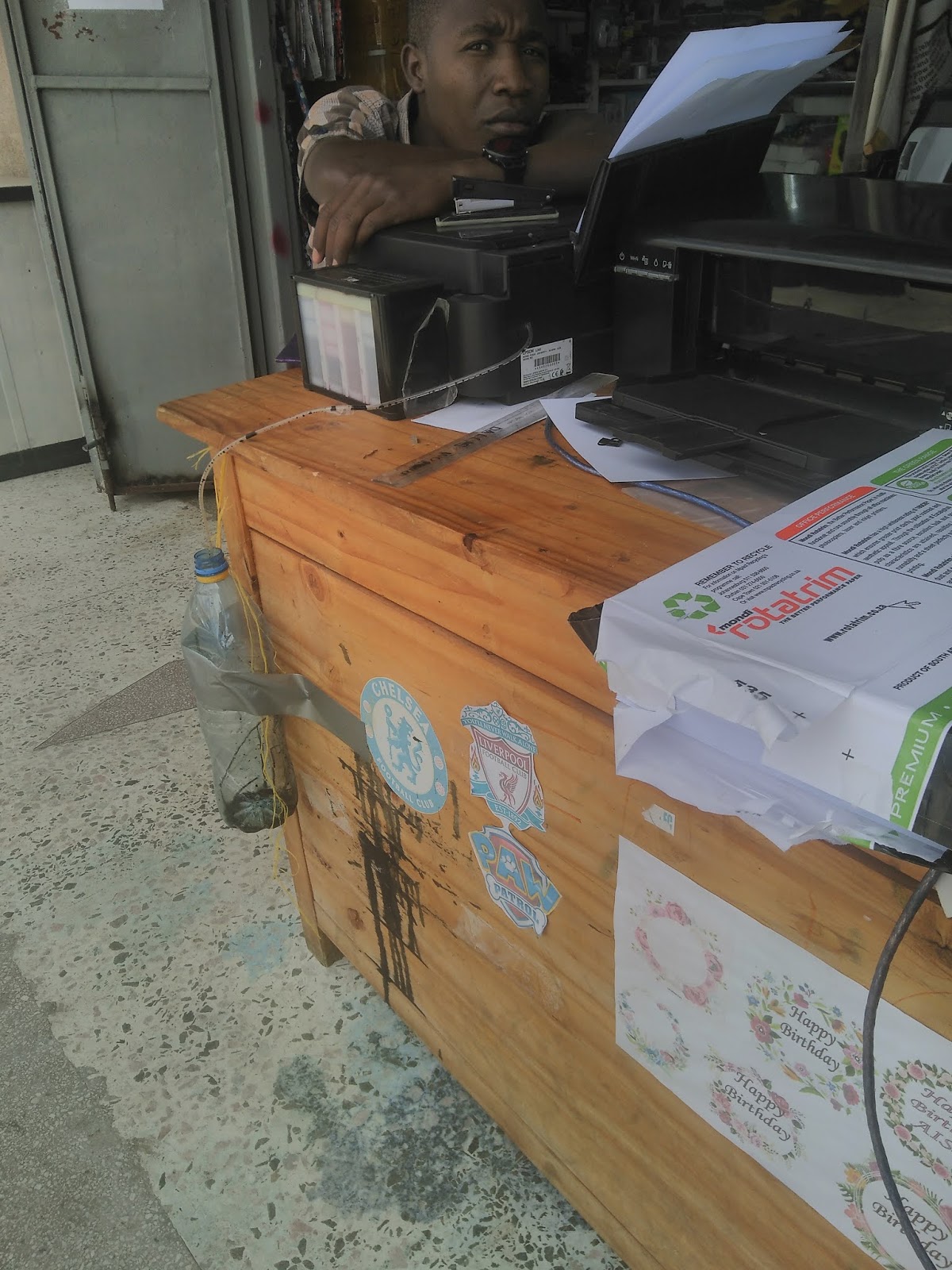
This guy has an ingenious way to beat the ink cartridge cartel.

Parking like this is acceptable. Sometimes ya gotta think outside the box, or, lane.

Saturday, June 27, 2020

Maramboi Tented Camp

Sunset over the flooded surroundings
Maramboi Tented Camp has one of my favorite surroundings of any lodge in the north, especially for a lodge outside of a national park. Mamramboi Tented camp sits on the eastern side of Lake Manyara (Lake Manyara National Park is on the western side of the lake). The lodge is situated in a Wildlife Management Area (WMA), one of several community run conservation protected areas in Tanzania.

Maramboi is a massive tented camp far less intimate than many other tented camps. It has over 40 rooms (most tented camps have less than 15) and serves more or less as an appetizer for other camps on safari. Most safari goers will stay here their first day of safari on their way from Arusha en route to Serengeti National Park. As a result most of the guests are only staying one night and they come in the evening with a quick turn around to be out in the morning. Thus some of the intimacy and attention to detail isn't quite as apparent in this lodge as others but it avoids feeling like an empty big box lodge/hotel.

The best thing Maramboi has is its setting. Normally it is set in a grassland with views of Lake Manyara but the massive rains this year have flooded the area right up to the lodges. Waterbirds are numerous and wildebeest and zebra graze right outside the tents. We've visited when the waters are lower and the shoreline is kilometers away and it's still quite beautiful. For us residents we still must pay a WMA fee but they're far less expensive than the national park fees. The lodging is far superior and better value than anything you'd find in the park with the only downside being it can feel quite crowded. However, for those in Arusha it makes a perfect weekend getaway.

The pool looking out into the lake.

Totally flooded

Wildlife from our balcony


Serengeti lodging: Kubu Kubu Tented Camp

The pool was VERY cold!
We were lucky enough to score an incredible deal at Kubu Kubu Tented camp. I hadn't realized it at the time, but we've actually stayed at two other properties owned by the same operator (Maramboi and Kati Kati) and had been impressed by both. We were excited to stay at this tented camp which was a kind of hybrid between a built up hotel and a fly camp. I suppose the name "tented camp" is appropriate.

The location of the camp is excellent in northwest central Serengeti. Seronera and even the western corridor are all easily accessible. The views over the plains are beautiful and there is no other camp in sight. We heard lions and hyenas in the plains below us every night and we even saw a hyena poking around the main lodge early one morning.

There are 25 tents available and I imagine if the place was full it might feel a little cramped but with few guests during our stay it was perfect. The tents are tastefully furnished with all the amenities one could ask for. I appreciated that they had a large drinking water dispenser and the outdoor shower was crafted quiet nicely. They were a little too close together and you could hear your neighbors early morning conversations and wake up calls. The staff was excellent and food delicious.

I always try to view the lodges through the lens of a first time visitor and in that regard the place did not disappoint. They even had a gym that was open air and facing towards a beautiful vista. Working out can be quite nice after sitting in a car all day, especially for a multi-night safari. However, since all the accommodation in Serengeti National Park are quite expensive, even the cheapest place is likely to have impressive amenities and services.

Overall I'd absolutely recommend Kubu Kubu Tented Camp!
Comfortable bed.

View from our balcony.

Inside leading to a very nice outdoor shower.


Serengeti: Trip III

Best sighting of the trip
With tourism down to unprecedented levels, the opportunity to experience Serengeti without the usual crowds was something we could not pass up. Our previous trips (Trip I, Trip II) were both phenomenal and I hold the Serengeti National Park on a pedestal far above any other national park I've visited in Africa. The density of wildlife is unparalleled. The only drawback, which is becoming a more frequent complaint, is that the park is overcrowded. Many people are surprised when they come on safari and see 10 other safari vehicles around a pride of lions. It can be a little annoying to have to overhear the conversations of the occupants in the other vehicles or jockey for position to get a good viewing. This can reduce the intimacy of the experience but it also helps to have so many eyes out browsing the landscape; information about sightings are communicated quickly through guides so locating rare animals become easier.

Ana and I had discussed the possibility of trying to visit the Serengeti without tourists and when my friend mentioned an amazing offer that one of the lodges was having, we literally booked our trip within 24 hours of receiving the information. It seemed like a truly once in a lifetime experience.

And sure enough, the trip lived up to every expectation and was a special experience. We arrived at the gate and it was stunning to see it empty. Typically you see up to 50 safari vehicles waiting in line. As we finished checking in we saw a touristy-yet-resident looking guy was checking out and I thought to myself, "hm, maybe there will be more people here than I expected...". We saw a caravan of five vehicles exiting the park shortly after we entered and I tried to taper my expectations regarding the relative emptiness of the park. Little did i know, those vehicles I saw within the first 10 minutes of arriving would be more than I'd see throughout our three nights in the park!

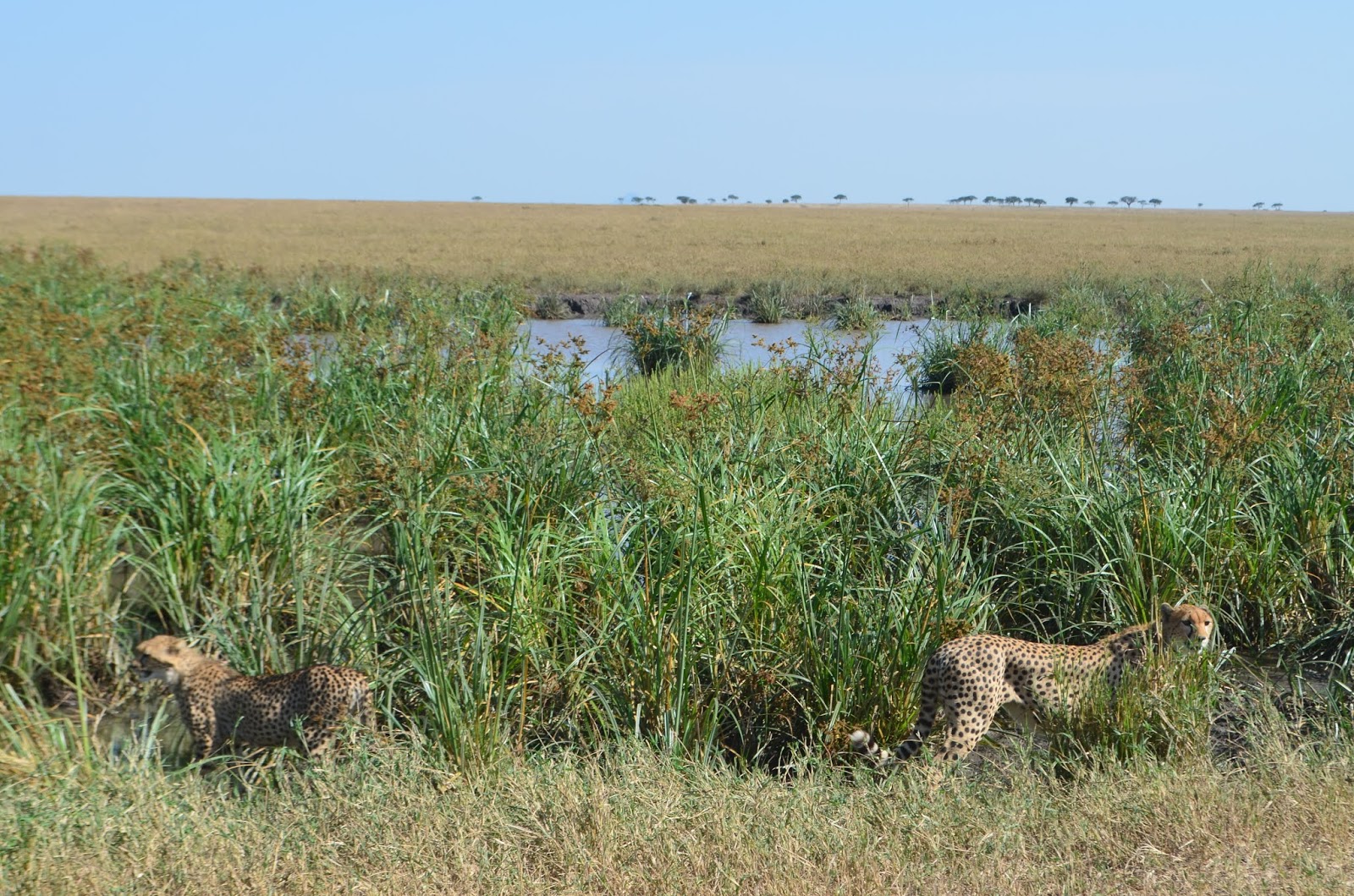
We only saw two other vehicles with tourists and none were at sightings of wildlife. Every single pride of lions that we saw (4 or 5 groups) we had to ourselves, including ones with kills. We were lucky enough to see the wildebeest migration in full force with no one else in sight. Three cheetahs on the road going to a wetlands to drink? Only us to watch them. It was kind of like low season in Ruaha only with 5x the density of wildlife.

Having the park to yourself doesn't just add intimacy to sightings but it also creates a kind of feeling of adventure. We had a map and relied on the ecology of the area (grasslands, rivers, etc) to identify our daily plans. We had some great drives and some long uneventful grass filled drives. Because tourism numbers have been way down since the rainy season many of the roads in the grasslands were very difficult to follow and all the smaller roads felt like no one had passed in weeks.

We were on the fence about this trip for a while and in the end I can't believe we even hesitated. The Serengeti will likely never have as few people and even when we came out on Saturday morning we began to see many more cars coming in, likely weekend trips from Arusha. Working in the field of conservation has certainly spoiled me rotten and this trip might have just put it over the top.

Saturday, June 20, 2020

Mikumi National Park: Trip III

Sunrise
After a few months of self-isolation and limited movement, we're finally getting a chance to get out. Luckily, visits to national parks are quite good in the times of a pandemic due to limited interactions with people. We had to attend a meeting in Mikumi so naturally parlayed a trip to the national park (Trip I, Trip II).

One of the best things about Mikumi is that one can stay in reasonably priced accommodation in Mikumi town and still make it inside the park early enough to take advantage of prime wildlife viewing hours. On the road in we actually saw three hyenas cross the road, an exciting sighting in any national park. We made it to the gate when they opened at 6:30am and spent the morning leisurely driving around. At some point we decided that we'd like to check out the miombo woodlands in the NE side of the park and headed up the western side of the park. I'm a sucker for exploring areas of national parks that are seldom visited or areas that have not previously visited. It appeared they had recently repaired the roads and we passed through some uneventful recently burned miombo woodland until we reached Choga wale Ranger Post. The ranger post was surrounded by more grassland and we happily greeted the rangers at the seldom visited post. We attempted to drive east to loop around to the gate but the road was impassable.

We thought we would have a meeting after lunch time but the meeting was delayed so we poked around the hippo pools and main area just north of the gate. Unfortunately we got notice that a huge pride of lions was spotted in an area of the park that was too far for us to reach. We did enjoy views of a solitary buffalo, solitary eland, a pair of Bohor Reedbuck, and all the other usual suspects. We were also pleasantly surprised to see quite a few domestic tourists, mostly whom I assumed were from Dar es Salaam. It's good to see Tanzanians plugging the gap missing from international arrivals!

Hippo pool with low water level.

A pretty accurate map.